

Lab-grown diamonds crossed a meaningful threshold in the UK engagement ring market in 2025: they now account for approximately 28% of diamond engagement ring sales by volume at independent jewellers. That's not a niche product any more — it's a mainstream choice that deserves an honest, practical explanation rather than either a sales pitch or a dismissal.
Here is what we actually tell customers who come in asking about lab-grown diamonds for engagement rings in 2026.
What lab-grown diamonds are (and what they are not)
A lab-grown diamond is not a simulant. Simulants — cubic zirconia, moissanite, white topaz — look like diamonds but are chemically different materials. A lab-grown diamond is chemically pure crystallised carbon, grown in a reactor to replicate the conditions under which natural diamonds form.
The two main production methods (CVD and HPHT — see our separate explainer) produce diamonds that are, at the atomic level, the same material as a natural diamond. The same hardness, the same refractive index, the same fire and brilliance. GIA grades lab-grown diamonds using the same 4Cs system as natural stones because they are the same gemological material.
What lab-grown diamonds are not: they are not mined from the earth, they are not geologically rare, and they currently do not hold their resale value in the same way as natural stones.
The price reality in 2026
The price difference between lab-grown and natural diamonds has widened significantly since 2020 as production capacity has scaled. In 2026, the approximate UK retail comparison for a round brilliant:
| Carat weight | Natural G/VS1 | Lab-grown G/VS1 | Saving |
|---|---|---|---|
| 0.50ct | £1,800–£2,500 | £450–£700 | ~75% |
| 1.00ct | £5,000–£7,500 | £900–£1,400 | ~80% |
| 1.50ct | £10,000–£15,000 | £1,500–£2,200 | ~85% |
| 2.00ct | £20,000–£30,000 | £2,200–£3,500 | ~87% |
These are directional figures; actual prices vary with specific grades and sourcing. The key point: the lab-grown saving doesn't just allow a similar stone for less money — it allows a significantly larger or higher-quality stone for the same budget.
Who should seriously consider lab-grown?
Lab-grown diamonds are a genuinely excellent choice if:
You prioritise stone size or quality over geological rarity. A 1.50ct lab-grown G/VS1 will have more visual presence and more light return than a 0.70ct natural G/VS1 at a similar total budget. For many couples, this is the most meaningful trade-off.
The ring is for keeping, not selling. If you will wear this ring every day for 50 years and never intend to sell it, the resale value gap is irrelevant. The stone itself will look identical to a natural diamond in every lighting condition for the rest of your life.
You have a limited budget with a clear size preference. Lab-grown removes the awkward compromise between stone size and quality at every price point.
Who should probably choose natural?
Those who value geological rarity. A natural diamond took 1–3 billion years to form under the earth's mantle. No reactor can replicate that. For some buyers, this is the point.
Those who may sell the ring eventually. Natural diamonds have far better resale markets. A well-graded natural diamond from a major lab (GIA) retains approximately 40–60% of retail value second-hand; a comparable lab-grown stone might bring 15–25% of its original retail price in 2026.
Those whose partner specifically wants a mined stone. Many people have a clear preference. It's their ring. Ask.
How we handle lab-grown at Ian Gallacher
We source IGI-certified CVD and HPHT lab-grown diamonds from verified suppliers and set them in the same platinum and 18ct gold settings we use for natural diamonds. We're completely transparent in all documentation — a lab-grown stone is identified as such on the certificate, the valuation, and our receipts.
We present both options honestly in consultations and let customers decide without pressure. If you're uncertain, we'll show you stones from both categories side by side and let you compare. The decision is yours.
Call 01786 462799 or visit us at 7 Murray Place, Stirling, Mon–Sat 09:30–17:00.
Shop the look
Pieces from our Stirling boutique that pair beautifully with this article.
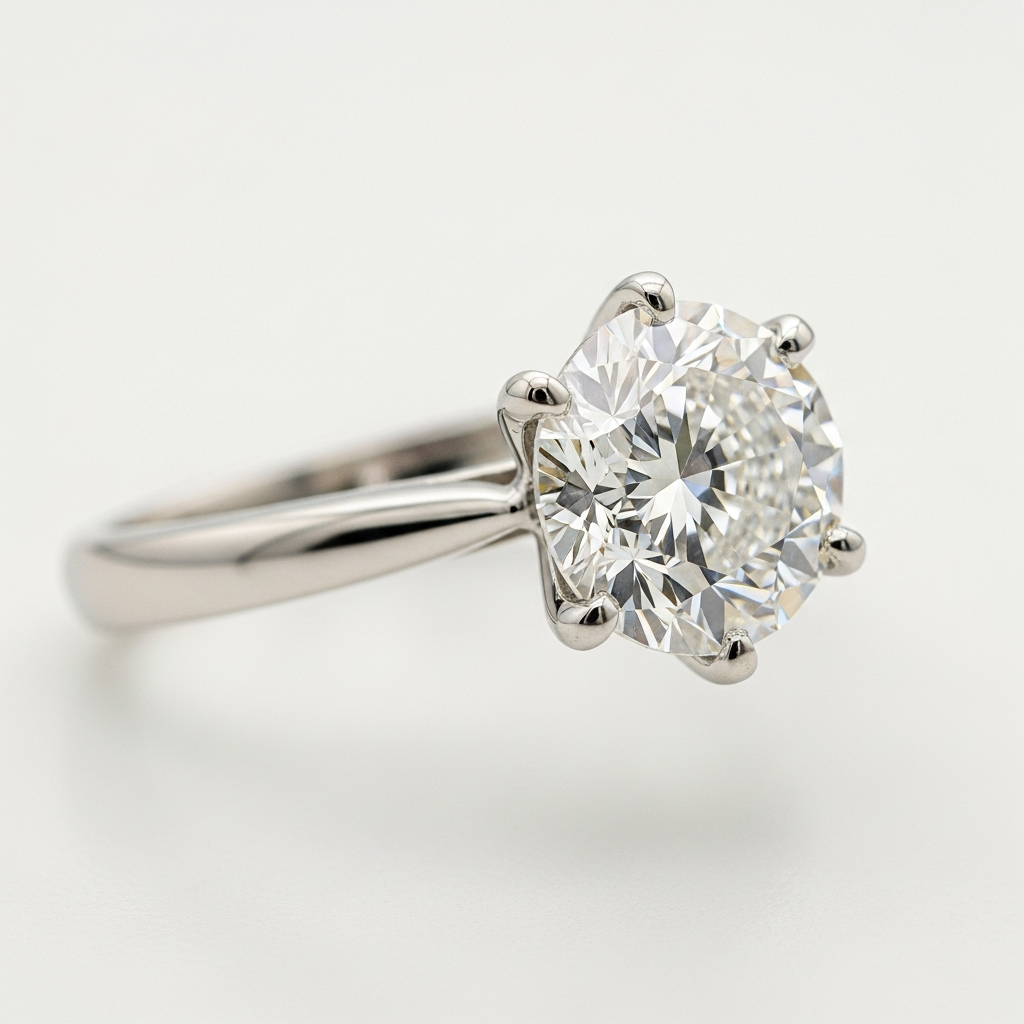
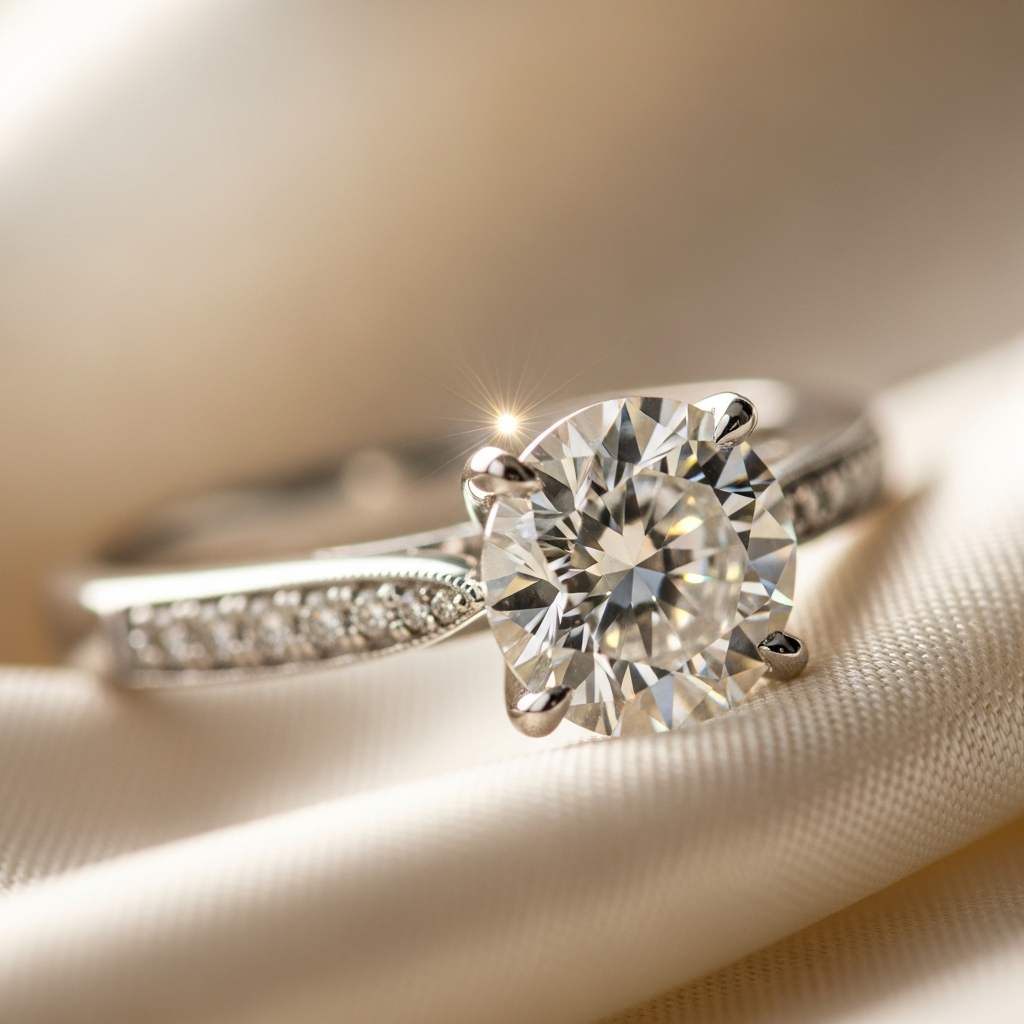
- Price difference for lab-grown vs equivalent natural round brilliant (2026)
- 60–75% lower
- Market share of lab-grown diamonds in UK engagement ring sales (2025)
- ~28%
- IGI-certified lab-grown 1.00ct round brilliant — typical UK retail price 2026
- £900–£1,400
Source: Ian Gallacher Jewellers — 2026 sourcing data
Source: National Association of Jewellers — Diamond Market Report 2025
Source: Ian Gallacher Jewellers — 2026 pricing
“Lab-grown diamonds are chemically identical to natural diamonds and optically indistinguishable without laboratory equipment. For a customer whose priority is maximising stone size and quality for a given budget, a lab-grown stone is an excellent choice. For someone who wants to pass the ring down as an asset, or who places value on geological rarity, natural is the better choice. Both are legitimate.”
Frequently asked questions
Sources & further reading
- [1] National Association of Jewellers — UK Diamond Market Report 2025 — National Association of Jewellers (accessed 2026-04-20)
- [2] GIA — Lab-Grown Diamond — Gemological Institute of America (accessed 2026-04-20)
- [3] IGI — Lab-Grown Diamond Reports — International Gemological Institute (accessed 2026-04-20)
People also ask
- Are lab grown diamonds worth buying UK?
- Do lab grown diamonds sparkle as much as real diamonds?
- Can you tell a lab grown diamond from a real one?
- What is the resale value of a lab grown diamond?
Related reading

Education
CVD vs HPHT Lab-Grown Diamonds: What's the Difference?
Two methods grow lab diamonds — CVD and HPHT. A Stirling jeweller with GIA training explains what each method produces, which to prefer, and whether it matters for an engagement ring.
Guides
Lab-Grown vs Natural Diamonds: An Honest Comparison
Identical chemistry, very different price curves. A Stirling jeweller's plain-English comparison of lab-grown vs mined diamonds for engagement rings in 2026.

Education
How to Read a Diamond Certificate: GIA vs IGI vs HRD Explained
Diamond certificates are full of jargon. A GIA-qualified Stirling jeweller explains what every field on a GIA, IGI or HRD report actually means — and which grading lab to trust.