

"Are lab-grown diamonds worth it?" is the question we hear most often from customers who've done some research and can see both the appeal (considerably larger stone for the same money) and the concern (something has gone wrong with resale value). The answer depends entirely on what "worth it" means to you — and we're going to give you an honest answer rather than a sales pitch in either direction.
The financial case: where it's clear
The size-for-money advantage is real and significant. In 2026, the lab-grown premium isn't "slightly cheaper" — it's roughly 75–80% less expensive for the same stated grade. The budget for a 0.70ct natural G/VS1 gets you approximately a 2.00ct lab-grown G/VS1. This is a genuine, meaningful, visible difference on the finger.
The resale value disadvantage is also real. Lab-grown diamond wholesale prices have fallen approximately 65% since 2020 and are widely expected to continue falling. A lab-grown stone bought at retail today will likely be worth 15–30% of its retail price second-hand in 2026, and may be worth even less in 2031 as prices continue to fall. A natural diamond from a certified source retains significantly more of its retail value over the same period.
For anyone considering the diamond partly as a store of value, the case for lab-grown is weak. For anyone who is certain they will never sell the ring and whose priority is stone size and quality within a budget, the case for lab-grown is strong.
The "forever piece" vs "financial asset" distinction
Most people buying an engagement ring intend to wear it for the rest of their life and never sell it. For those people — and this is genuinely the majority — the resale value gap is largely theoretical. A lab-grown 2.00ct oval that makes the wearer smile every time they look at it for 50 years has delivered its value regardless of what a second-hand dealer would pay for it.
The value calculation changes if:
- You might upgrade or sell the ring in the future
- You view the ring partly as a financial hedge
- You want to pass a financially meaningful asset to the next generation
In those cases, the current trajectory of lab-grown prices makes natural the more defensible choice.
The visual case: a settled question
At the level of everyday visual assessment — what a partner sees across a table, what appears in photographs, what shows in office light and restaurant light — lab-grown and natural diamonds of the same cut quality are indistinguishable. We are comfortable saying this without qualification because it is the scientific reality of two chemically identical materials. A well-cut lab-grown G/VS1 will outperform a poorly-cut natural G/VS1 in brightness and fire every time.
The "you can tell" narrative that circulates among jewellers with natural-only inventory is not supported by evidence.
The ethical case: genuinely nuanced
Lab-grown avoids land disturbance from mining. It does not avoid energy use — CVD production consumes approximately 250 kWh per carat. The cleanest ethical option, by most metrics, is a recycled mined diamond reset into a new piece; lab-grown is not categorically more ethical than responsibly mined Canadian or Australian diamonds. The relative weight of these considerations is a personal decision; we don't make it for customers.
Our honest bottom line
Lab-grown diamonds are worth buying for: couples who want maximum stone for their budget, who are certain they'll never sell the ring, and for whom geological rarity is not a meaningful value. They represent excellent value as a wearable gemstone.
Lab-grown diamonds are not worth buying for: those who want a store of value, those whose partners value geological rarity, or anyone intending to upgrade or resell within the next decade.
Both are legitimate. We sell both. Come in and we'll show you examples of each at the same carat weight and grade so you can see the actual stones, compare them, and make the decision that's right for you.
7 Murray Place, Stirling. Mon–Sat 09:30–17:00. Call 01786 462799 to book a viewing.
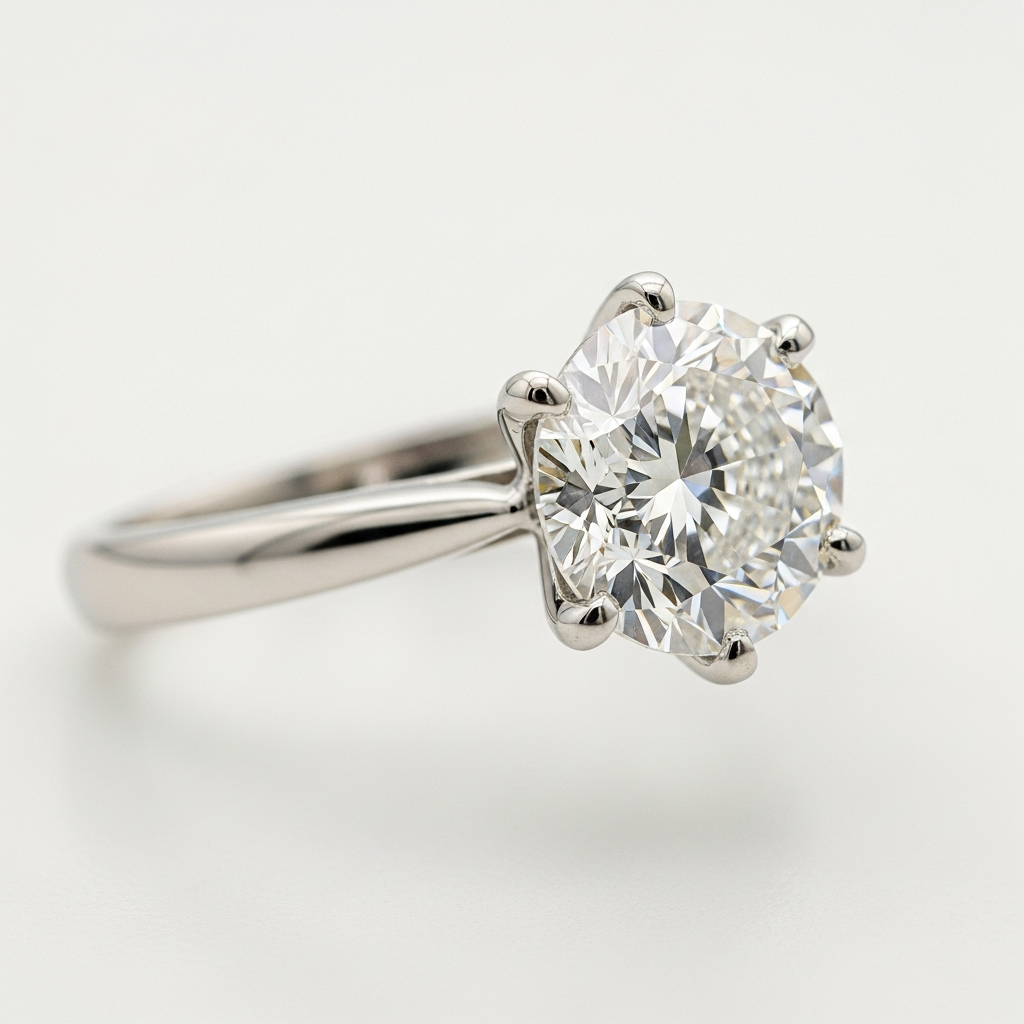
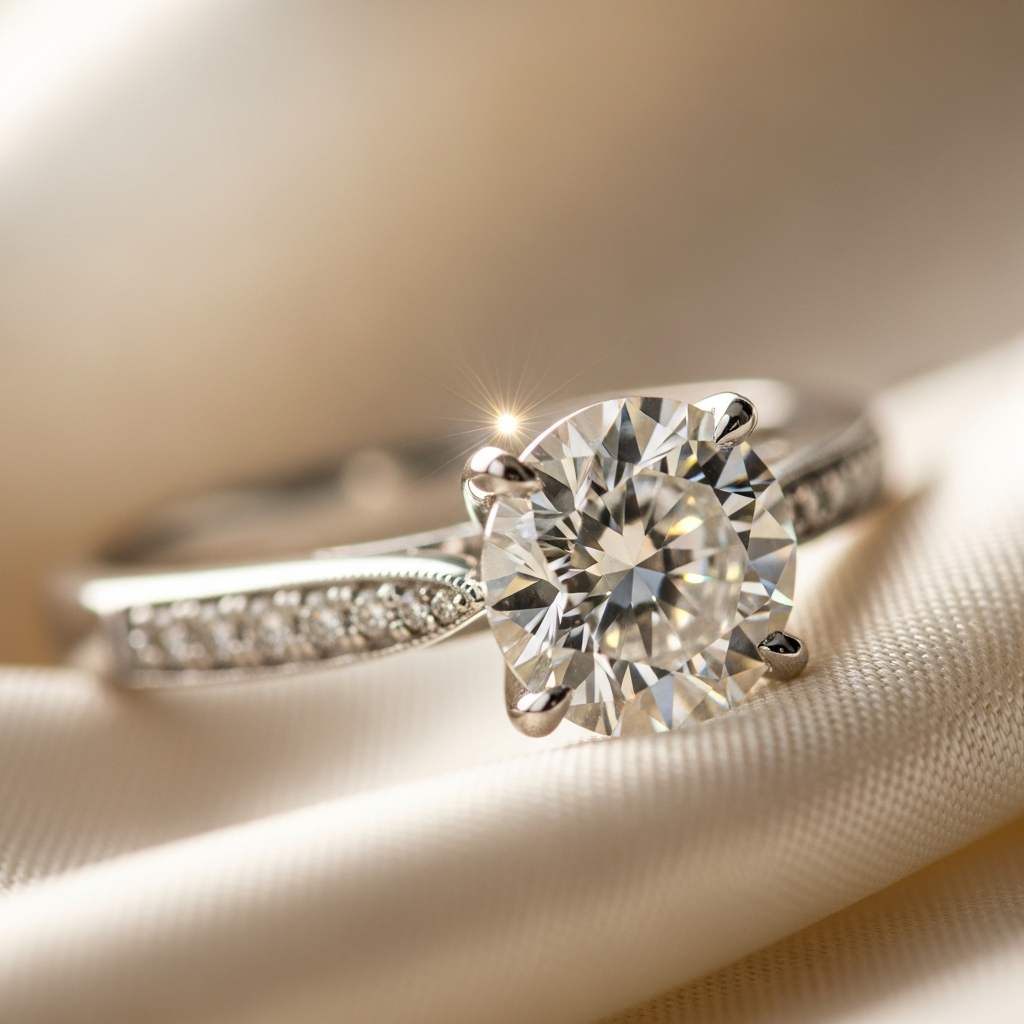
Shop the look
Pieces from our Stirling boutique that pair beautifully with this article.
- Price decline in lab-grown 1ct round brilliant wholesale (2020–2024)
- ~65%
- Estimated lab-grown diamond resale value as % of retail (2026)
- 15–30%
- Average size premium for lab-grown at same budget as natural (1ct natural budget)
- Lab-grown buyer gets ~2.00ct
Source: Paul Zimnisky Diamond Analytics — Lab-Grown Wholesale Price Index 2024
Source: Ian Gallacher Jewellers — buy-back and resale observations 2025–2026
Source: Ian Gallacher Jewellers — 2026 sourcing comparison
“If you're asking whether a lab-grown diamond is worth buying, the question you're really asking is: what do you want from the diamond? If the answer is 'a beautiful, hard-wearing stone I'll wear every day and never sell,' then a lab-grown makes complete sense for many budgets. If the answer includes 'something that holds financial value,' natural diamonds are the more defensible choice in 2026.”
Frequently asked questions
Sources & further reading
- [1] Paul Zimnisky Diamond Analytics — Lab-Grown Diamond Market 2024 — Paul Zimnisky (accessed 2026-04-15)
- [2] Natural Diamond Council — Sustainability Report — Natural Diamond Council (accessed 2026-04-15)
- [3] GIA — Lab-Grown Diamonds — Gemological Institute of America (accessed 2026-04-15)
People also ask
- Do lab grown diamonds lose value UK?
- Are lab grown diamonds real gems?
- Can you sell a lab grown diamond UK?
- What are the disadvantages of lab grown diamonds?
Related reading

Education
CVD vs HPHT Lab-Grown Diamonds: What's the Difference?
Two methods grow lab diamonds — CVD and HPHT. A Stirling jeweller with GIA training explains what each method produces, which to prefer, and whether it matters for an engagement ring.
Guides
Lab-Grown vs Natural Diamonds: An Honest Comparison
Identical chemistry, very different price curves. A Stirling jeweller's plain-English comparison of lab-grown vs mined diamonds for engagement rings in 2026.

Guides
Lab-Grown Diamond Engagement Rings in 2026: What to Know Before You Buy
Lab-grown diamonds are now mainstream for engagement rings in the UK. A Stirling jeweller explains who they suit, what they cost, and what the honest trade-offs are in 2026.