

If you've spent any time on Instagram looking at engagement rings, you'll have seen the same three silhouettes over and over: a single diamond on a clean band, a centre stone wreathed in tiny accent diamonds, or three stones in a row. Solitaire, halo and trilogy account for over 90% of the engagement rings we sell at our Murray Place workshop in Stirling, and each suits a different sort of wearer. This guide explains, with real prices and real trade-offs, how to pick between them.
At-a-glance comparison
| Style | Visual effect | Best with shape | Maintenance | Typical 2026 price (1ct centre, platinum) |
|---|---|---|---|---|
| Solitaire | Maximum sparkle from centre stone, timeless | Round, oval, princess | Low (annual claw check) | £4,200–£5,400 |
| Halo | Centre looks 25–30% larger | Round, oval, cushion | Moderate (6-monthly clean) | £4,800–£6,200 (with halo accents) |
| Trilogy | Wide horizontal silhouette, three stones | Oval, emerald, pear | Moderate (3 stones to monitor) | £5,800–£6,800 |
The short answer
- Choose a solitaire if you want maximum sparkle from the centre diamond and a design that will never date.
- Choose a halo if you want the look of a much larger stone on a smaller budget, and don't mind slightly more cleaning.
- Choose a trilogy if you want a piece that tells a story — past, present, future — and you like a horizontal, vintage-leaning silhouette.
Solitaire — the classic that never dates
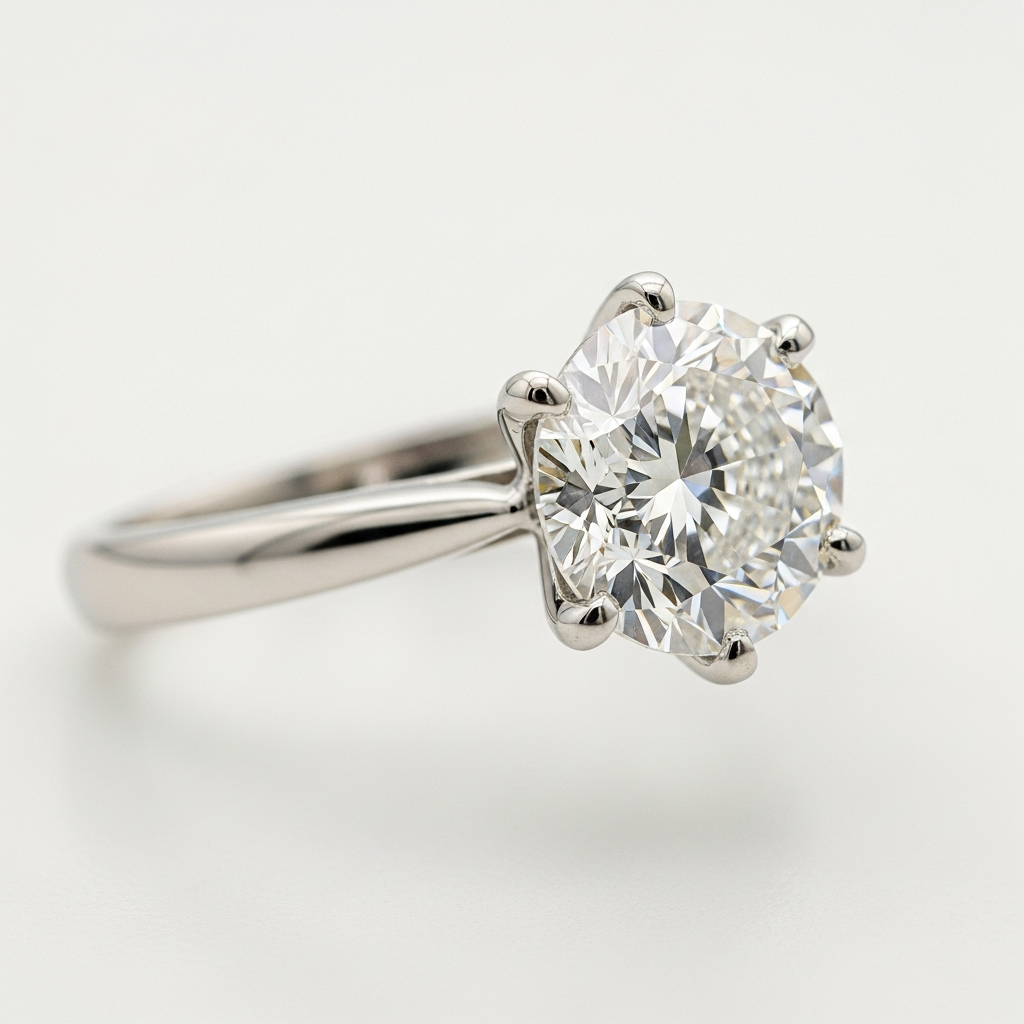
A solitaire is one diamond, held by 4 or 6 prongs, on a plain or pavé-set band. It is the single most popular engagement ring style in the UK and has been since the early 20th century. The reason is simple: nothing competes with the centre stone for light return, so a well-cut diamond looks brightest in this setting.
A typical 1.00ct H/SI1 GIA round brilliant in a 6-claw platinum solitaire from our workshop sits at £4,200–£5,400 in 2026. Drop to 0.70ct and you're looking at £2,800–£3,400 for the same quality grades.
Best for: people who like clean lines, who want the diamond to do all the talking, and who plan to wear the ring every day for the next 50 years.
Halo — bigger face-up size, more sparkle around the edges
A halo wraps 14–20 small accent diamonds around the centre stone. Optically, this makes the centre look 25–30% larger than the same diamond in a solitaire, and the accent stones throw additional sparkle when the wearer moves her hand.
The trade-off: more cleaning (those tiny grain settings hold lotion and skin oil), and a slightly higher snag risk on jumpers. Also, halos can date — the very thin "micro halo" of 2018 already looks of-its-era. We recommend a classic halo silhouette over a trendy one if you want the design to read well in 2050.
A 0.70ct centre stone in a platinum halo with 18 accents typically runs £3,200–£3,900.
Best for: people who want maximum perceived size for their budget, and who don't mind a small extra maintenance commitment.
Trilogy — three stones, three meanings
A trilogy (or three-stone) ring places a centre diamond between two smaller side stones. Traditionally these represent the past, present and future of the relationship; in practice they create a wider, more horizontal silhouette than a solitaire.
Trilogy works particularly well in oval, emerald and pear cuts, where the side stones can taper to match the centre's shape. It is less successful in round brilliant — the proportions can feel chunky.
A 1.00ct oval centre with two 0.30ct ovals either side, in platinum, comes in around £5,800–£6,800 depending on the colour grade chosen.
Best for: people who like vintage-leaning design, who want a horizontal sweep across the finger, or who want the symbolism of three stones for a milestone moment.
How to decide in 10 minutes
- Look at five photos of your partner's existing jewellery. If she wears delicate pieces, lean solitaire. If she wears statement pieces, lean halo or trilogy.
- Decide on shape first (round, oval, emerald, cushion) — this often eliminates one of the three styles.
- Set a budget. A solitaire gives you the largest centre stone for the money; a halo gives you the largest face-up appearance.
- Visit a workshop and try mock-ups on the actual finger. The same design looks very different on a long slim finger vs a shorter one.
If you'd like to see all three styles side-by-side in person, our boutique on Murray Place in Stirling stocks a curated comparison tray with mock-up centres so you can see exactly how each design will sit on the hand. Walk-in or call 01786 462799 to book a private appointment.
Shop the look
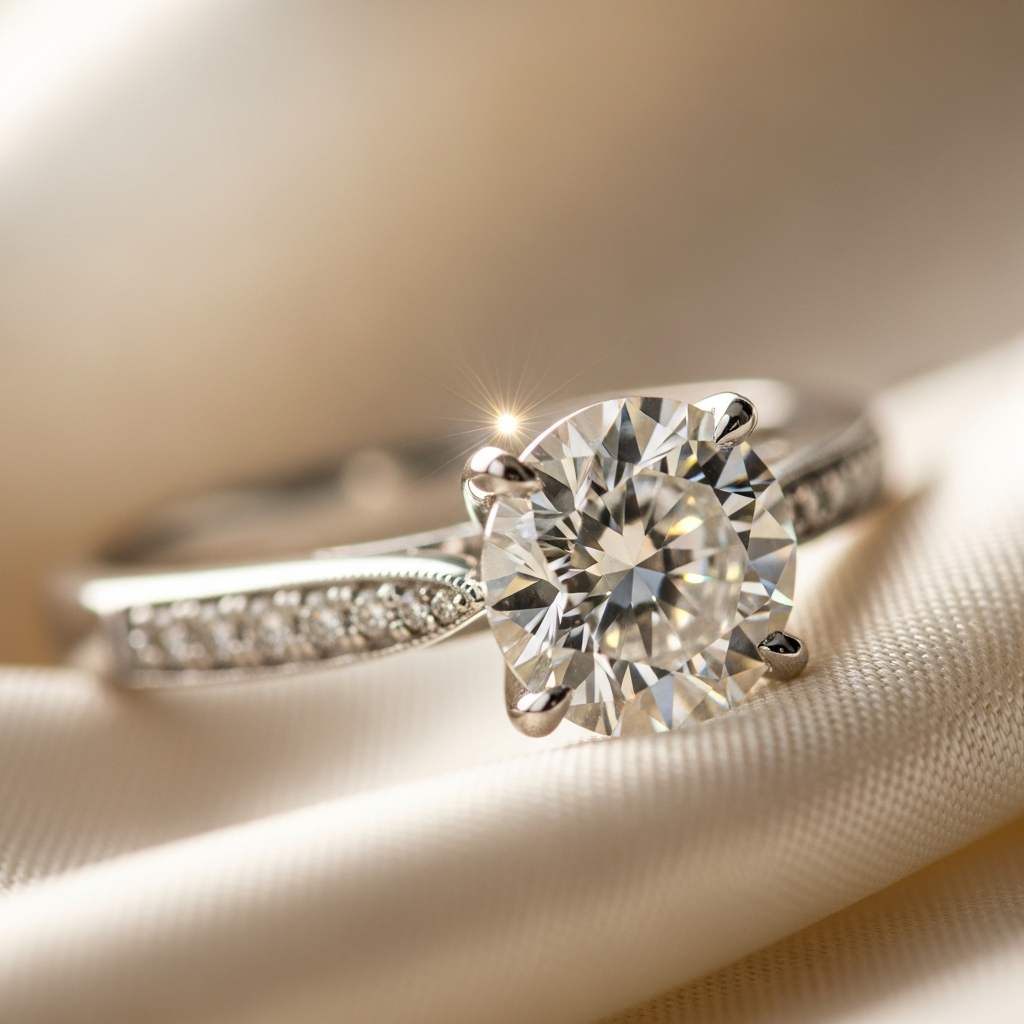
Pieces from our Stirling boutique that pair beautifully with this article.
- Solitaire share of UK engagement ring sales
- 55%
- Average uplift in face-up size from a halo
- 25–30%
- Trilogy ring re-tip frequency
- every 8–10 years
Source: Ian Gallacher Jewellers, 2025 sales data (n=412)
Source: GIA — Halo Setting Optical Effects
Source: Workshop notes, Ian Gallacher Jewellers
“Nine times out of ten, the buyer arrives convinced she wants a halo, and leaves with a solitaire. The light return on a well-cut centre stone simply does more work.”
Frequently asked questions
Sources & further reading
- [1] GIA — Halo Setting Engagement Rings — Gemological Institute of America (accessed 2026-04-15)
- [2] Assay Office Edinburgh — Hallmarking Standards — Edinburgh Assay Office (accessed 2026-04-15)
People also ask
- What is the difference between a halo and a hidden halo ring?
- Are trilogy engagement rings outdated?
- How much does a halo engagement ring cost in the UK?
- Can I add a halo to my existing solitaire?
Related reading
Buying Advice
How to Choose an Engagement Ring (UK Buyer's Guide 2026)
Diamond cut, metal choice, certification, finance and bespoke options — a Stirling jeweller's complete UK buyer's guide for 2026.
Guides
Lab-Grown vs Natural Diamonds: An Honest Comparison
Identical chemistry, very different price curves. A Stirling jeweller's plain-English comparison of lab-grown vs mined diamonds for engagement rings in 2026.

Buying Advice
Court vs D-Shape vs Flat: Wedding Band Profiles Compared
The shape of a wedding band's cross-section changes how it feels, how it sits next to an engagement ring, and how it wears over decades. A Stirling jeweller's side-by-side comparison.