
Choosing an engagement ring is the biggest jewellery purchase most people will ever make, and it can feel daunting — but it doesn't need to. After 50 years of designing and hand-setting engagement rings in our Murray Place workshop, we've boiled the decision down to six things that actually matter: shape, stone, certificate, metal, setting, and budget. Get those right and you'll have a piece that looks beautiful, holds value, and lasts a lifetime.
This guide is written for a UK audience and reflects 2026 prices, finance options and hallmarking. It is opinionated — we will tell you what we'd recommend to our own daughters — but every choice is yours.
1. Start with the diamond shape, not the setting
The shape of the centre diamond is the single biggest visual decision and the easiest one to get wrong by overthinking it. Round brilliant is still the most popular choice in the UK in 2026 (around 55% of our orders) because it returns more light than any other cut and suits almost every hand. Oval has overtaken princess as the most-requested fancy shape — it lengthens the finger and makes a 1.00ct stone look closer to 1.20ct face-up. Emerald cut and cushion cut have a quieter, vintage character; they show inclusions more readily so you'll want at least VS2 clarity.
If your partner already wears statement jewellery, lean into a fancy shape. If she favours simple pieces, the round brilliant solitaire never dates.
2. Understand the 4Cs — but in this order
Every diamond is graded on Cut, Colour, Clarity and Carat. Most websites tell you to balance them. We'll be sharper than that:
| Grade | What it controls | Where to spend | Where to save |
|---|---|---|---|
| Cut | How the stone returns light | Excellent or Very Good only. | Never compromise. |
| Colour | How "white" it looks | Aim for G–H in white metal | I/J colour saves ~15% if set in yellow gold |
| Clarity | Inclusions visible to the eye | VS2 or SI1 eye-clean | VS1 / VVS is invisible to the eye — pay for paper, not beauty |
| Carat | Size, in 0.20g units | Hit a "magic" size: 0.50, 0.70, 1.00, 1.50ct | Drop just under (0.95ct) for noticeably less |
A well-cut H, SI1, 1.00ct GIA-graded round brilliant in platinum is the sweet spot for most UK buyers in 2026 — typically £4,200–£5,400 depending on the maker.
3. Insist on a certificate from a recognised lab
Any diamond above 0.30ct should come with an independent grading report from GIA, IGI, HRD or, for older stones, AGS. These reports physically describe the diamond — its measurements, proportions, fluorescence, and a plotted map of inclusions — and let you compare like-for-like across jewellers. Avoid in-house "appraisals" without a recognised lab certificate when the stone is over 0.30ct: there is no industry-standard grading scale behind them.
4. Platinum or 18ct white gold?
Both look nearly identical when polished, but they wear differently.
- Platinum (950) is naturally white, denser, and more secure for the prongs holding your centre stone. It scratches into a soft, attractive patina over years of wear.
- 18ct white gold is lighter on the finger and slightly cheaper, but it's rhodium-plated to look bright white. The plating wears off in 18–24 months and needs to be re-applied every couple of years to keep its colour.
- 18ct yellow or rose gold is making a strong comeback for vintage-styled rings — the warmer metal flatters most skin tones and pairs beautifully with milgrain detailing.
Our workshop will often recommend a platinum head with a gold band if you want the warmth of gold and the security of platinum claws. For more on the trade-offs, see our platinum vs white gold care guide.
5. Choose a setting that protects the stone
The four most popular settings in 2026 are:
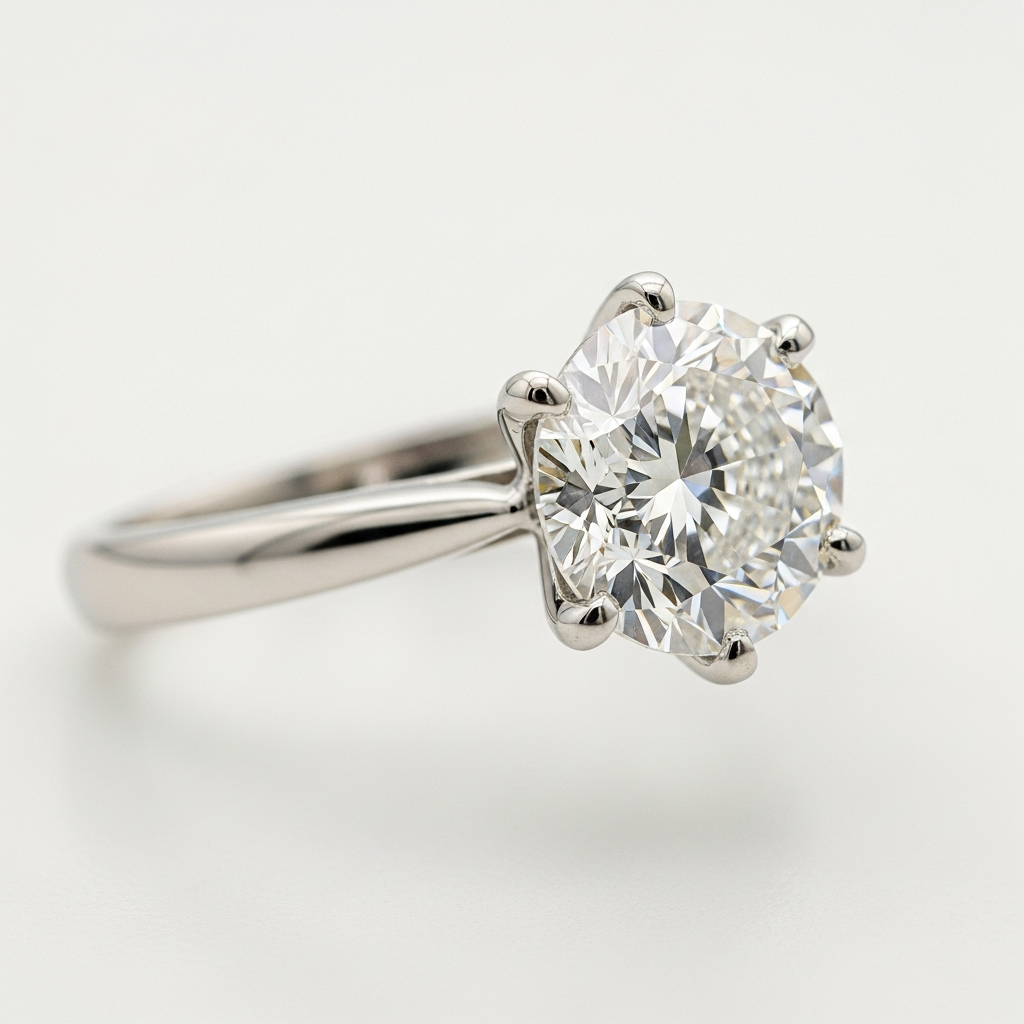
- Solitaire (4-claw or 6-claw) — maximum light, the classic choice.
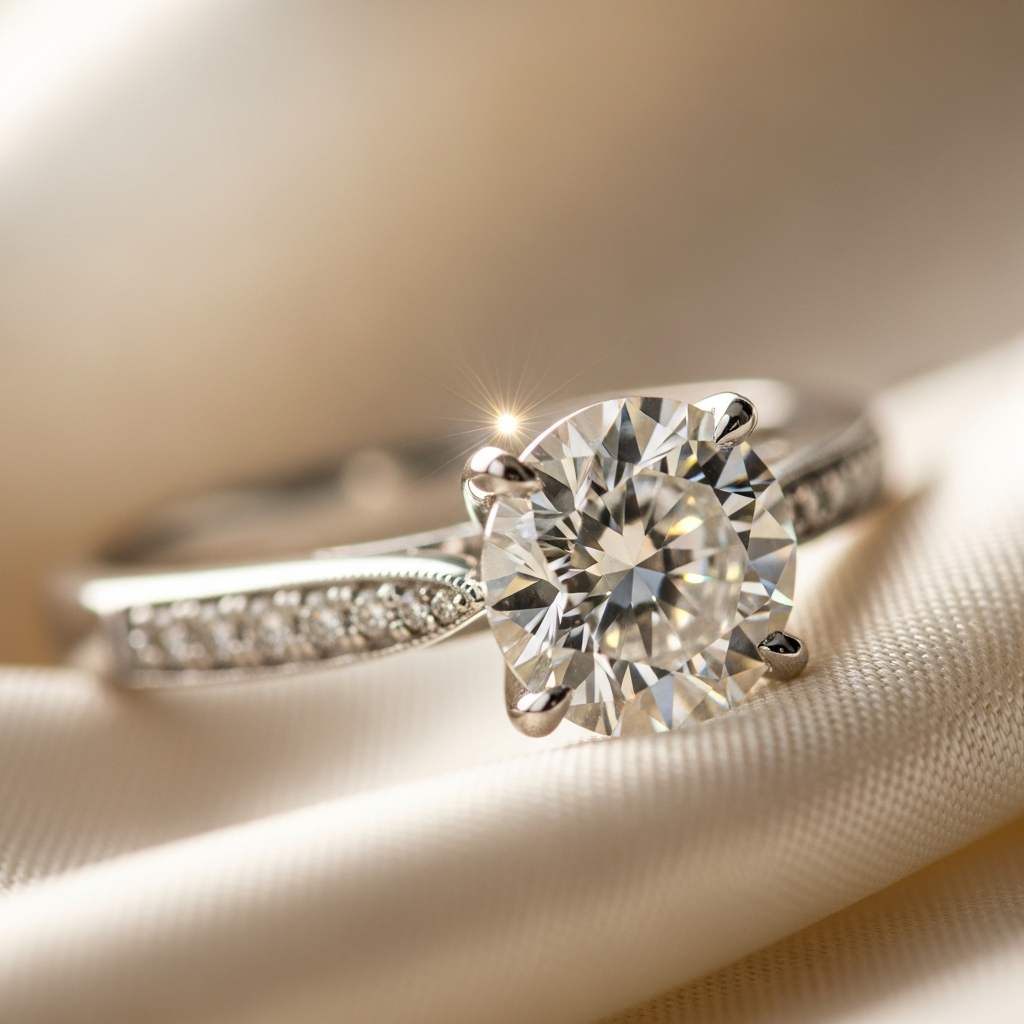
- Halo — a ring of small diamonds around the centre stone, makes the centre look 25–30% larger.
- Trilogy — three stones representing past, present and future, beautiful in emerald or oval cut.
- Bezel / rub-over — modern, low-profile, snag-free for active hands.
If your partner is hands-on at work or in sport, a 6-claw or bezel setting is more secure. If she'll never take it off, low-profile is more comfortable under gloves.
6. Set a sensible budget — and ask about finance
Most of our 2026 engagement ring sales sit between £1,500 and £4,000, with a long tail above £6,000 for larger or rarer stones. We don't believe in the old "three months' salary" rule. We do believe in stretching by one quality grade if it's affordable — it's a piece you'll wear every day for 40+ years.
We offer 0% interest-free finance over 12 months with Omni Capital Retail Finance on any order above £500, subject to status. Spreading a £3,000 ring over 12 months works out at £250/month — about the price of a weekend away. Read the finance terms before you decide.
A 5-step plan for the next 4 weeks
- Week 1. Look at her current jewellery. Yellow or white metal? Vintage or modern? Big or delicate? Take five photos.
- Week 2. Decide on shape and rough budget. Read this guide and our 4Cs primer.
- Week 3. Visit our boutique on Murray Place to try mock-up rings and see real diamonds under daylight (not LED) — book by calling 01786 462799.
- Week 4. Confirm the design, sign off the certificate, and pay deposit. We'll have the ring resized and ready in 7–10 working days, or up to 4 weeks for a fully bespoke commission.
Want help in person?
Our master jeweller offers free, no-obligation consultations at 7 Murray Place, Stirling. Bring photos, bring a friend, bring questions — there is no pressure to buy on the day. We've helped four generations of central Scotland find the right ring, and we'd love to help you too.
Shop the look
Pieces from our Stirling boutique that pair beautifully with this article.
- Proportion of UK engagement rings that are solitaire style
- ~48%
- Proportion of Ian Gallacher clients using interest-free finance
- ~38%
- Average UK engagement ring spend (2025)
- £2,400
Source: Ian Gallacher Jewellers — 2025 sales data
Source: Ian Gallacher Jewellers — 2025 finance applications
Source: Hitched.co.uk — National Wedding Survey 2025
“The biggest mistake people make is focusing on the carat number before they've decided on the cut. A 0.70ct Excellent-cut H/SI1 will look more impressive on the finger than a 1.00ct Fair-cut D/IF nine times out of ten. Come in and we'll show you both under daylight — the difference is immediately obvious.”
Frequently asked questions
Sources & further reading
- [1] Hitched.co.uk — National Wedding Survey 2025 — Hitched (accessed 2026-04-15)
- [2] GIA — The 4Cs of Diamond Quality — Gemological Institute of America (accessed 2026-04-15)
- [3] Edinburgh Assay Office — Hallmarking Standards — Edinburgh Assay Office (accessed 2026-04-15)
People also ask
- What is the average cost of an engagement ring in the UK 2026?
- Are lab-grown diamonds a good investment?
- How long should an engagement ring take to make?
- Do I need a diamond certificate?
- What is the most popular engagement ring style in 2026?
Related reading
Guides
Lab-Grown vs Natural Diamonds: An Honest Comparison
Identical chemistry, very different price curves. A Stirling jeweller's plain-English comparison of lab-grown vs mined diamonds for engagement rings in 2026.

Care & Maintenance
Caring for Platinum vs White Gold Jewellery
Platinum patina, rhodium plating, ultrasonic cleaners and prong checks — how to keep your white-metal jewellery brilliant for decades, from a Stirling jeweller's bench.

Buying Advice
Solitaire vs Halo vs Trilogy: Which Engagement Ring Style Suits You?
A side-by-side comparison of the three most-requested UK engagement ring styles in 2026 — solitaire, halo and trilogy — with prices, pros and cons from a Stirling jeweller's bench.