

Ring sizing is the most consistently misunderstood part of buying a ring. Most people either overestimate how precisely they know their finger size, or underestimate how much it changes. A ring that fits today may not fit in six months for reasons entirely unrelated to weight change.
This guide explains the UK sizing system, how to measure at home, when to get professionally sized, and what to do if you get it wrong.
The UK ring size system
UK ring sizes use a letter-based system running from A (smallest, rarely used) to Z (largest). Half sizes — L½, M½, etc. — are common. Each full size corresponds to a difference of approximately 1.25mm in inner circumference.
The equivalent conversions to the most common international systems:
| UK | US | EU (circumference, mm) | Inner diameter (mm) |
|---|---|---|---|
| J | 4.75 | 49 | 15.7 |
| L | 5.75 | 51 | 16.3 |
| M | 6.25 | 53 | 16.9 |
| N | 6.75 | 54 | 17.2 |
| O | 7.25 | 55 | 17.5 |
| P | 8.00 | 57 | 18.1 |
| R | 9.00 | 60 | 19.1 |
| T | 10.00 | 63 | 20.0 |
| U | 10.5 | 65 | 20.6 |
The most common UK women's engagement ring sizes are L through N. Men's wedding bands typically run T through W.
How to measure at home (paper strip method)
- Cut a strip of paper approximately 5mm wide and 100mm long.
- Wrap the strip around the base of the target finger — the same finger, same hand, the ring will be worn on.
- Mark the point where the paper overlaps with a pen.
- Remove and measure the length from the start of the strip to the mark in millimetres. This is the inner circumference.
- Add 1–2mm to the measurement to allow for the knuckle.
- Convert to UK letter size using the table above.
Important caveats: Home measurement gives an estimate within ±1 size. Always measure at mid-afternoon (see FAQ). Always account for seasonal variation. Professional fitting with a set of ring gauges at the jeweller's is more accurate, free, and takes 2 minutes.
Measuring using an existing ring
If you're buying a surprise engagement ring and need to know the partner's size, borrowing a ring they already wear on the same finger is more reliable than trying to measure their finger:
- Take the ring without the partner knowing.
- Bring it to us — we'll measure it in 30 seconds and return it immediately. You don't even need to leave it.
- Alternatively, slide the ring down your own finger until it stops, mark the position with a biro dot, and measure the circumference at that point.
When to get professionally sized
Professional fitting should be done for any ring that matters:
- Before a proposal: Book a professional sizing appointment. If it needs to be a surprise, we can size the partner by invitation (just book an appointment with us for a "browse" — we'll size them during the visit).
- Before ordering a bespoke ring: We measure the finger at the consultation and take a second measurement at the collection fitting if any significant time has passed.
- Before a wedding band: We fit the ring precisely at the time of order, then check the fit again when the finished ring is collected.
What changes ring size
- Time of day: Fingers are smallest in the morning, largest in the afternoon.
- Temperature: Cold weather shrinks fingers by 1–2 sizes. Hot weather or exercise expands them.
- Weight change: Significant weight change (more than 10kg in either direction) will affect ring size.
- Pregnancy: Finger size typically increases during pregnancy and usually returns to normal afterward.
- Age: Fingers generally increase in size with age; most people find their ring size is slightly larger at 50 than at 25.
Our resizing policy
Every ring purchased from Ian Gallacher Jewellers includes one free resize within six months of purchase. This covers size changes of up to two sizes in either direction, subject to design compatibility (see FAQ).
After six months or for a second resize, there is a small bench fee. Resizing takes 3–5 working days; more complex resizes (platinum, full eternity rings, stone-set shanks) may take longer.
Visit us at 7 Murray Place, Stirling, Mon–Sat 09:30–17:00, to be fitted in person. Ring sizers are also available to take home for a week if you're trying to size a partner covertly.
Shop the look
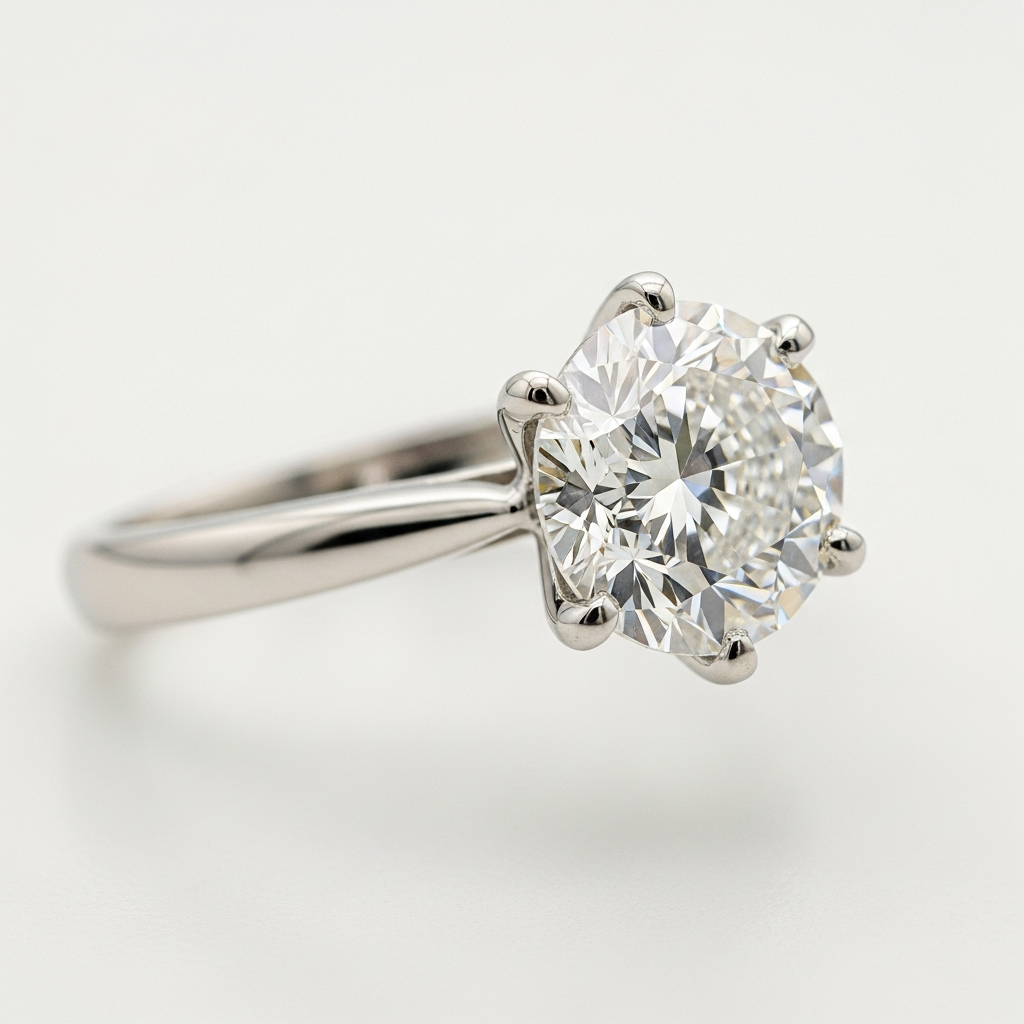
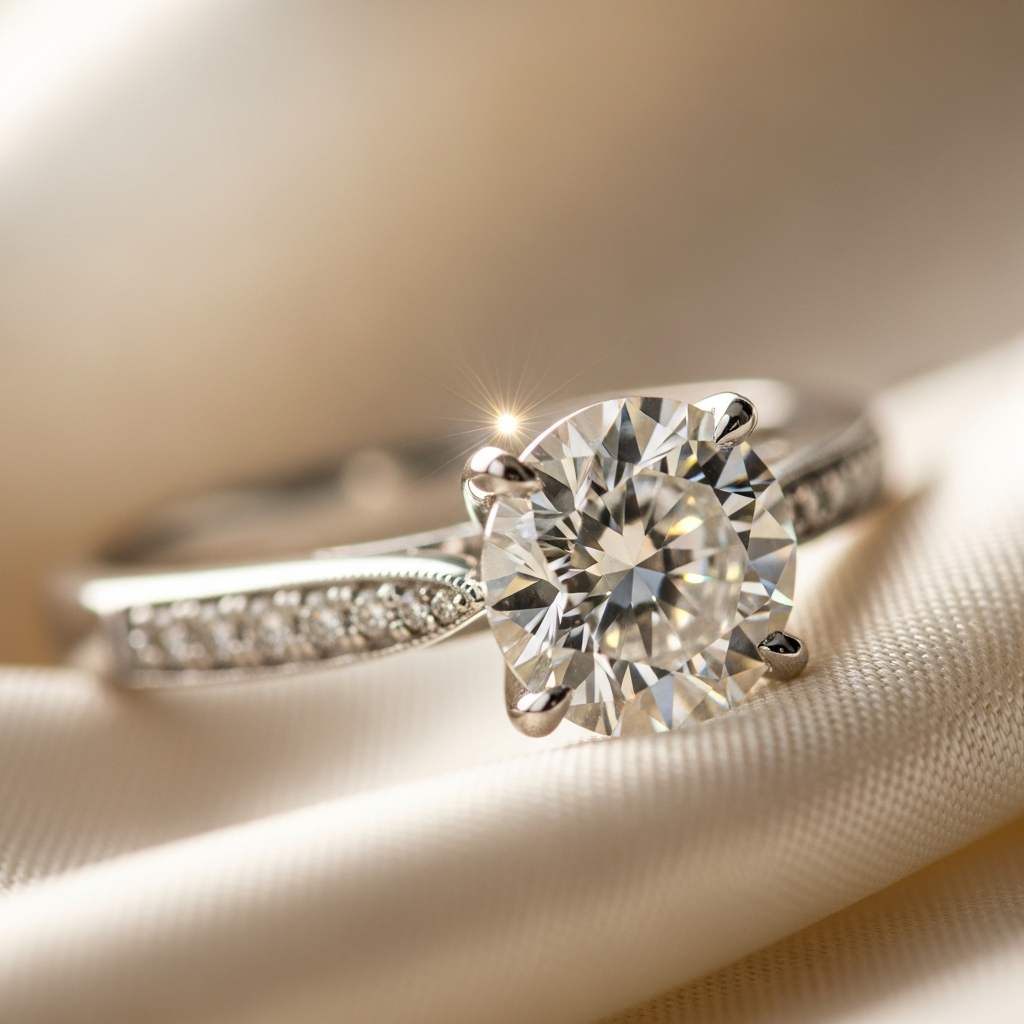
Pieces from our Stirling boutique that pair beautifully with this article.
- Most common UK women's engagement ring size
- L–M (US 6–6.5)
- Most common UK men's wedding band size
- T–U (US 10–10.5)
- Number of free resizes included with rings purchased from Ian Gallacher
- 1 (within 6 months of purchase)
Source: Ian Gallacher Jewellers — 2025 fitting records
Source: Ian Gallacher Jewellers — 2025 fitting records
Source: Ian Gallacher Jewellers — after-sales policy
“Fingers change size throughout the day, across seasons, and over a lifetime. The most important thing is to have the ring fitted professionally before the engagement or wedding — not to rely on a home measurement taken once at a random time of day. A ring that fits slightly tight when you wake up and slightly loose after exercise is about right.”
Frequently asked questions
Sources & further reading
- [1] GIA — Ring Sizing and Fitting — Gemological Institute of America (accessed 2026-04-01)
- [2] National Association of Jewellers — Consumer Guidance — National Association of Jewellers (accessed 2026-04-01)
- [3] British Standards Institution — Ring Gauge Standards — BSI (accessed 2026-04-01)
People also ask
- How do I measure my ring size without a ring sizer?
- Is UK size L the same as US 6?
- What happens if my engagement ring is too small?
- Do ring sizes change with age?
Related reading
Buying Advice
How to Choose an Engagement Ring (UK Buyer's Guide 2026)
Diamond cut, metal choice, certification, finance and bespoke options — a Stirling jeweller's complete UK buyer's guide for 2026.

Buying Advice
Bespoke vs Off-the-Shelf Engagement Rings: Which is Right for You?
Not every engagement ring needs to be bespoke — and not every ready-made ring is a compromise. A Stirling jeweller gives an honest comparison to help you decide.

Buying Advice
How to Choose a Wedding Band That Complements Your Engagement Ring
Profile, metal, width, fit — a Stirling goldsmith's guide to choosing a wedding band that sits beautifully alongside your engagement ring for decades of daily wear.